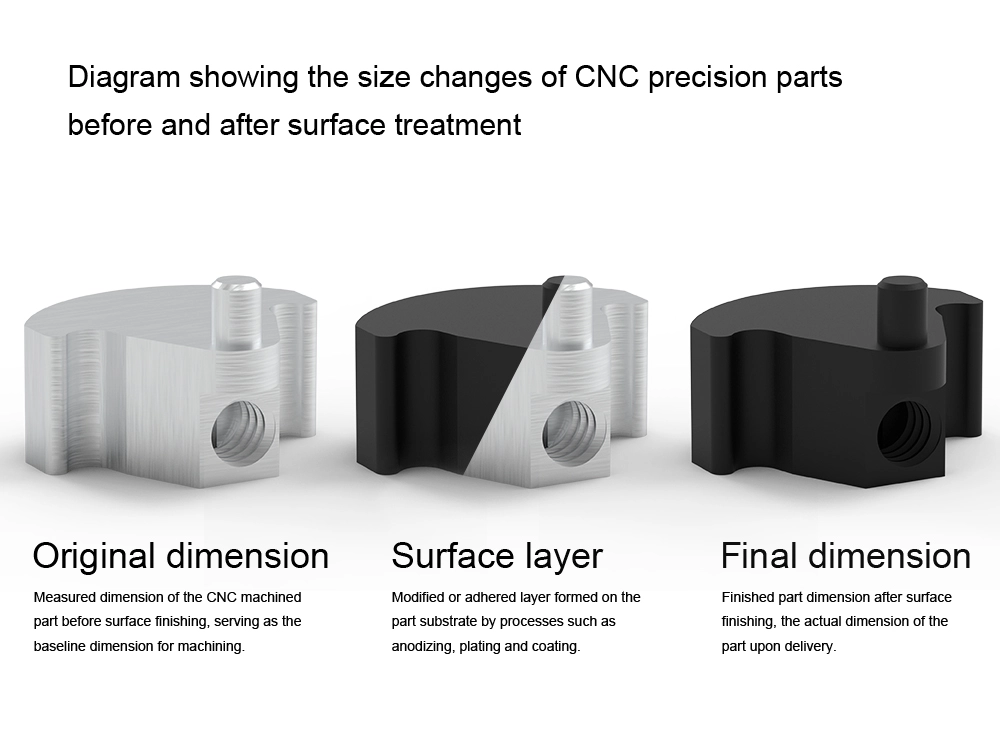
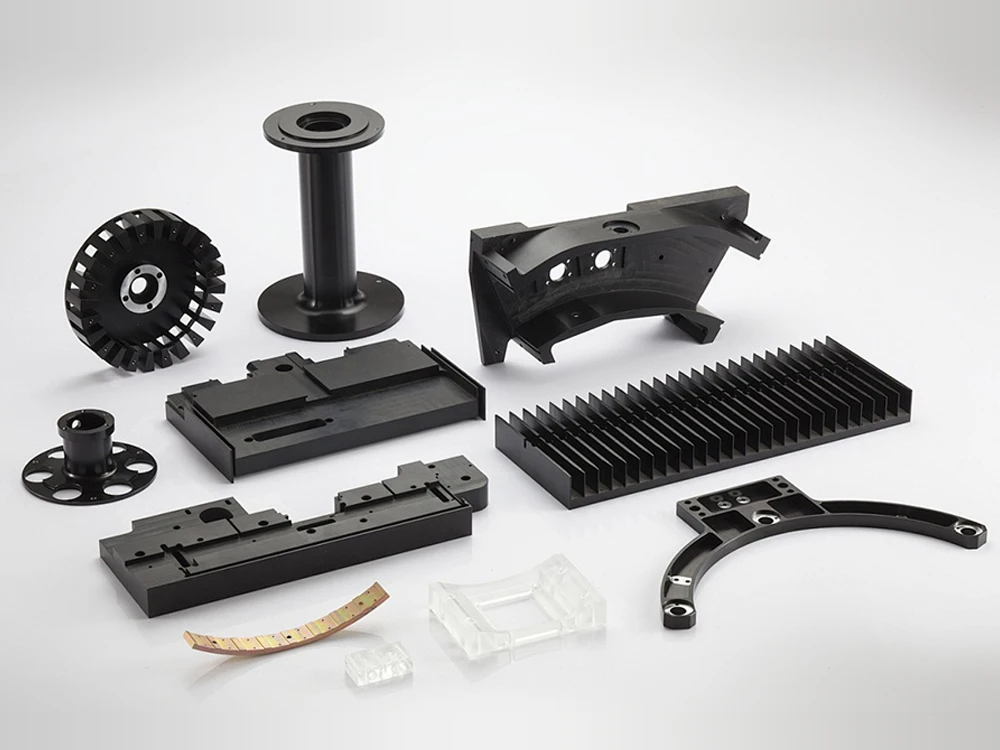
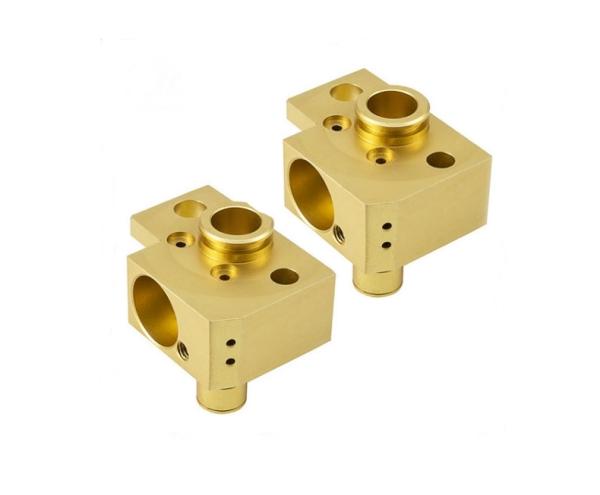
Yes, surface finishing can affect the final dimensions and tolerances of CNC machined parts. Plating and coating add material, while polishing and abrasive finishing remove material. The amount of change depends on the process, coating thickness, part geometry, and the location of critical features.
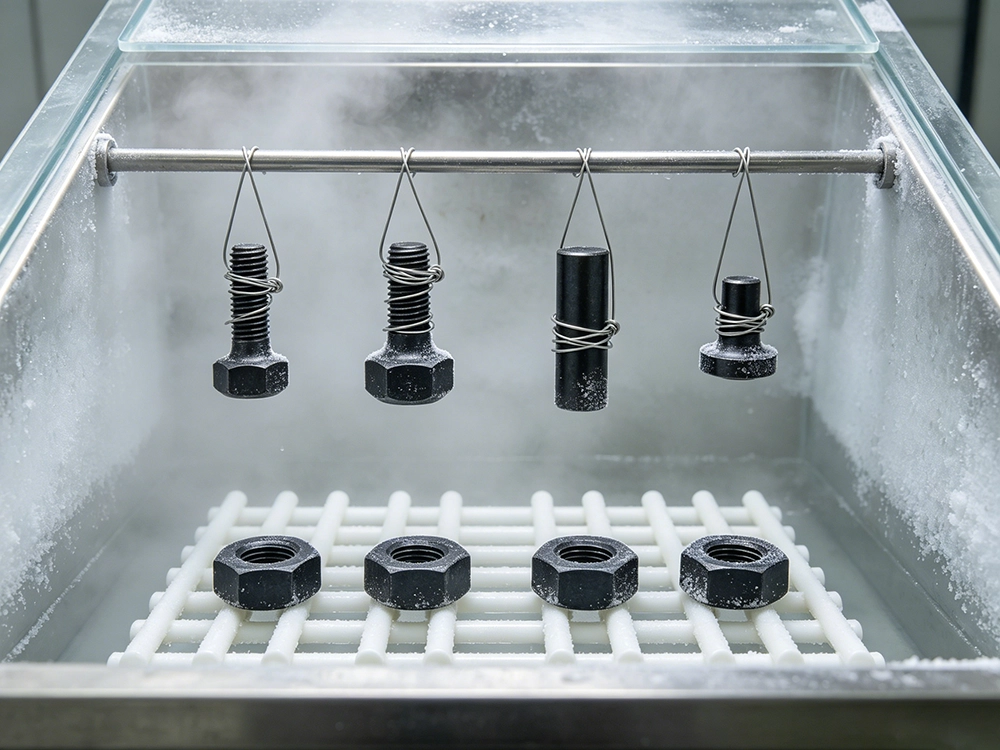
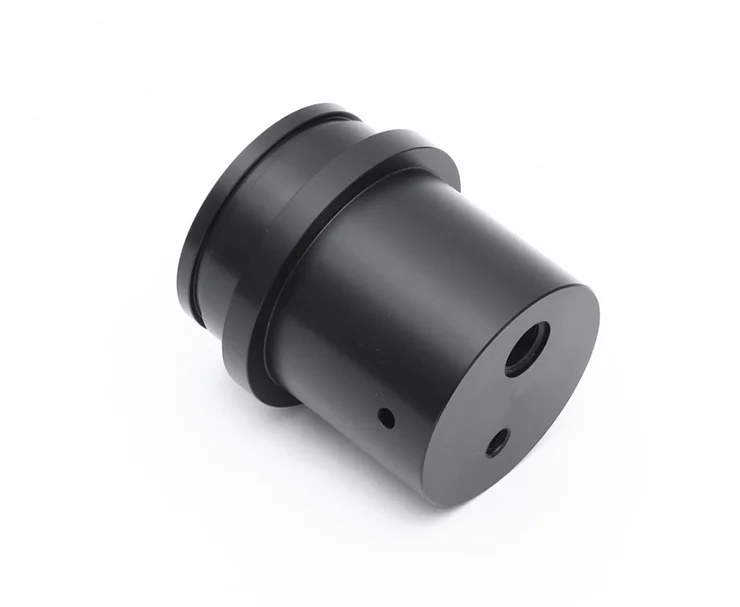
Blackening coating, also known as black oxide coating, is a chemical conversion process that forms a thin black oxide layer on carbon steel and low-alloy steel parts. Unlike deposited coatings that add a separate material layer onto the surface, black oxide converts the steel surface itself into a protective oxide film, resulting in minimal dimensional change. For precision components such as turned fasteners, locating pins, and spring clips, maintaining thread accuracy and mating surface fit is critical. Because black oxide creates an extremely thin conversion layer, it is commonly selected for steel parts where a uniform black appearance, surface consistency, and tight dimensional control are required.
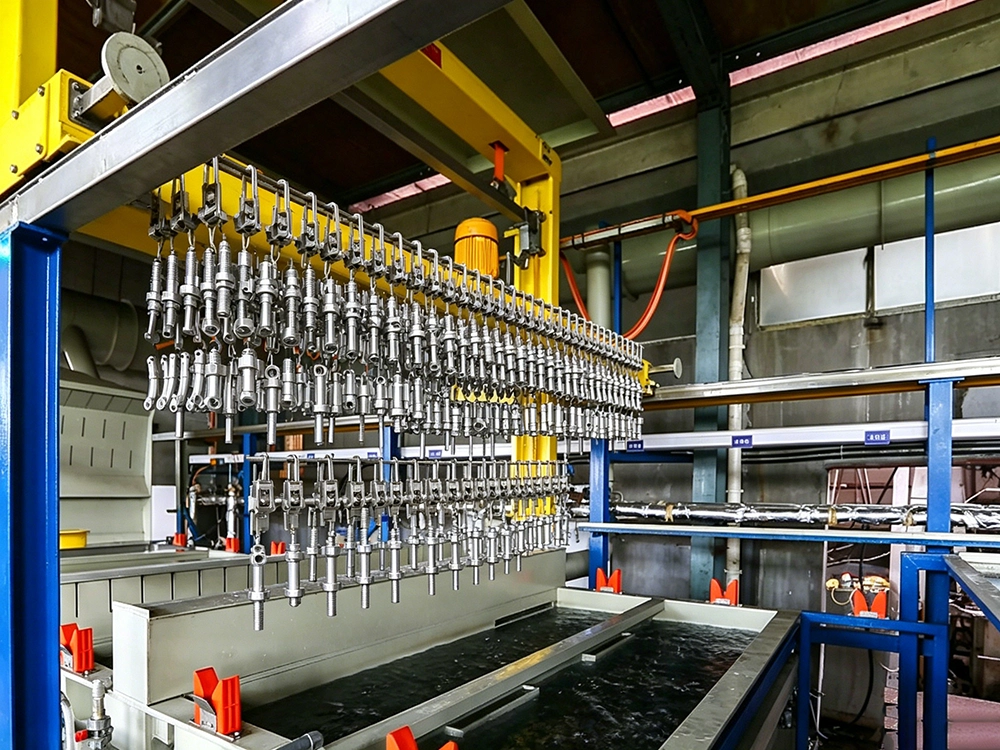
Anodizing aluminum is an electrochemical surface treatment process that converts the outer surface of aluminum parts into a controlled aluminum oxide (Al₂O₃) layer. Unlike applied coatings that add a separate material layer, anodizing transforms the aluminum substrate itself to create a durable surface with improved corrosion resistance, wear performance, and appearance. In industrial manufacturing, the anodizing process typically includes surface preparation, controlled oxidation, optional coloring, and sealing to achieve consistent results for CNC-machined aluminum components.
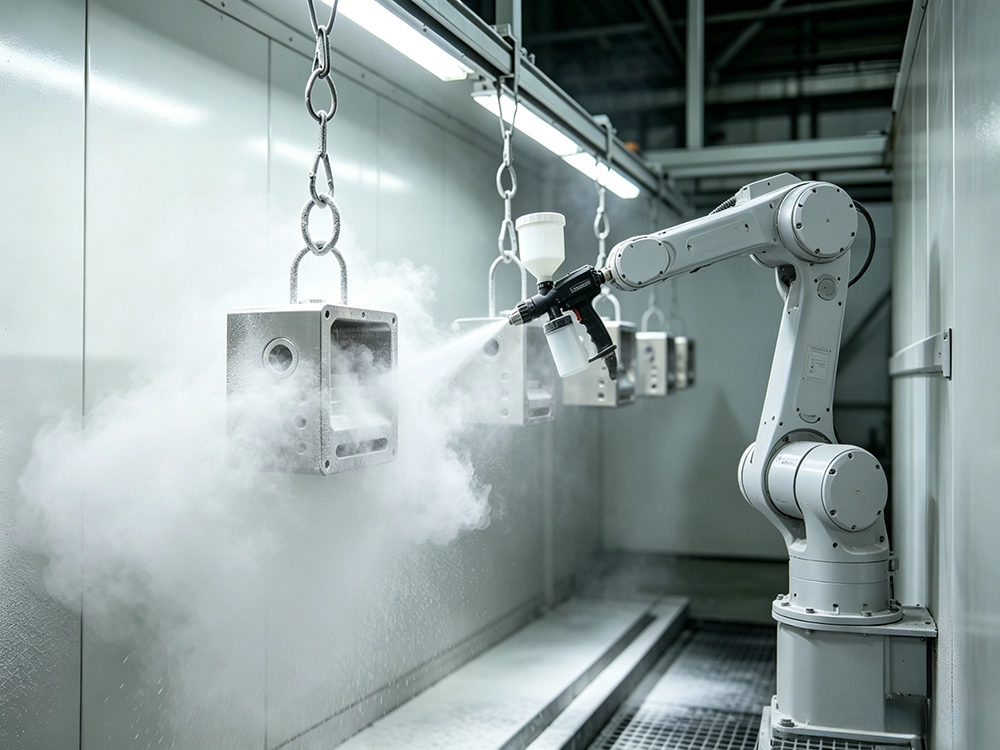
When industrial components face aggressive chemical exposure or severe mechanical wear, engineers rely on powder coating—a dry finishing process that utilizes electrostatic adhesion to apply free-flowing powder, which is then thermally cured to form a highly durable, cross-linked protective layer. Unlike traditional liquid paints that suffer from VOC emissions, dripping, and uneven coverage, this method ensures a uniform, chip-resistant finish even on complex geometries. Whether you need a resilient powder coat for automotive chassis, a weatherproof powder coated surface for architectural aluminum, or heavy-duty powdercoating for industrial machinery, this technology solves critical design bottlenecks related to corrosion, metal fatigue, and premature part failure. 【Key Takeaways】 Core Mechanism: Relies on electrostatic charge to bond dry powder to metal substrates, followed by a thermal baking process that triggers chemical cross-linking for maximum adhesion. Engineering Advantages: Delivers superior resistance to corrosion, impact, chemicals, and UV degradation compared to conventional wet paint, drastically extending the lifespan of parts in harsh environments. Eco-Friendly & Cost-Effective: Operates as a near-zero VOC process that allows for overspray recovery, making it a highly compliant and economical surface treatment solution for large-scale B2B manufacturing.
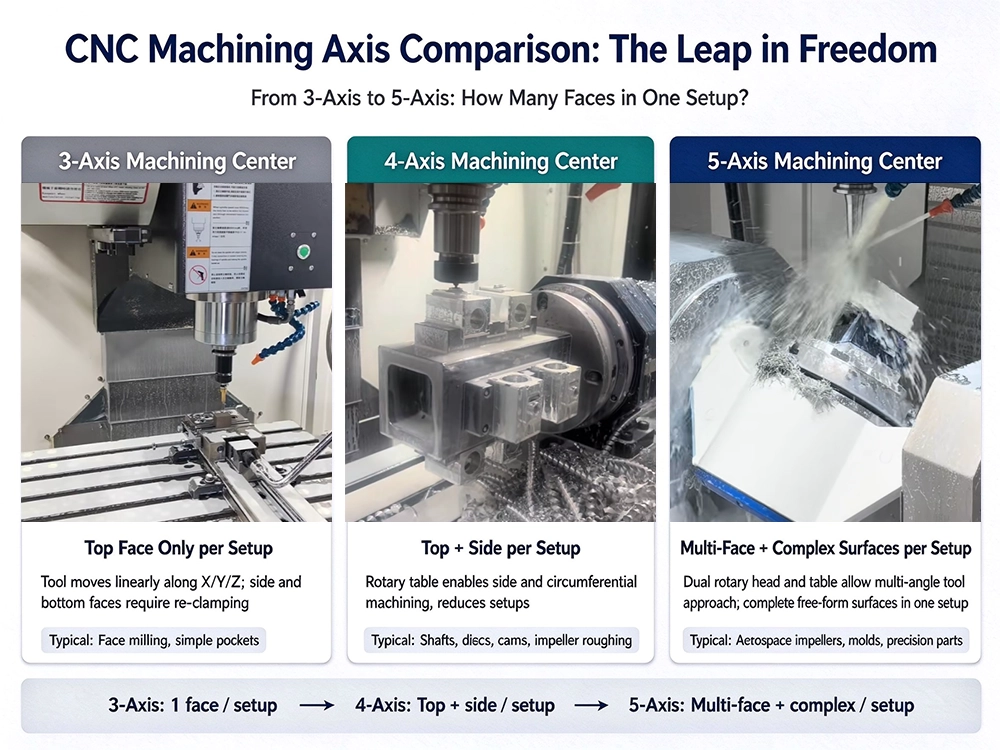
When machining complex enclosures, deep pockets, or multi-faceted housings, manufacturing engineers face a recurring trade-off: balance single-setup part precision against machine hourly rates and programming overhead. Selecting between 3-axis, 4-axis, and 5-axis CNC machining is not an arbitrary upgrade path where more axes inherently yield a superior part. Instead, it is an optimization problem governed by geometric accessibility, positional tolerance stack-up across refixturing cycles, batch
We use cookies to improve your experience on our site. By using our site, you consent to cookies.
Manage your cookie preferences below:
Essential cookies enable basic functions and are necessary for the proper function of the website.
These cookies are needed for adding comments on this website.
WhatsApp us